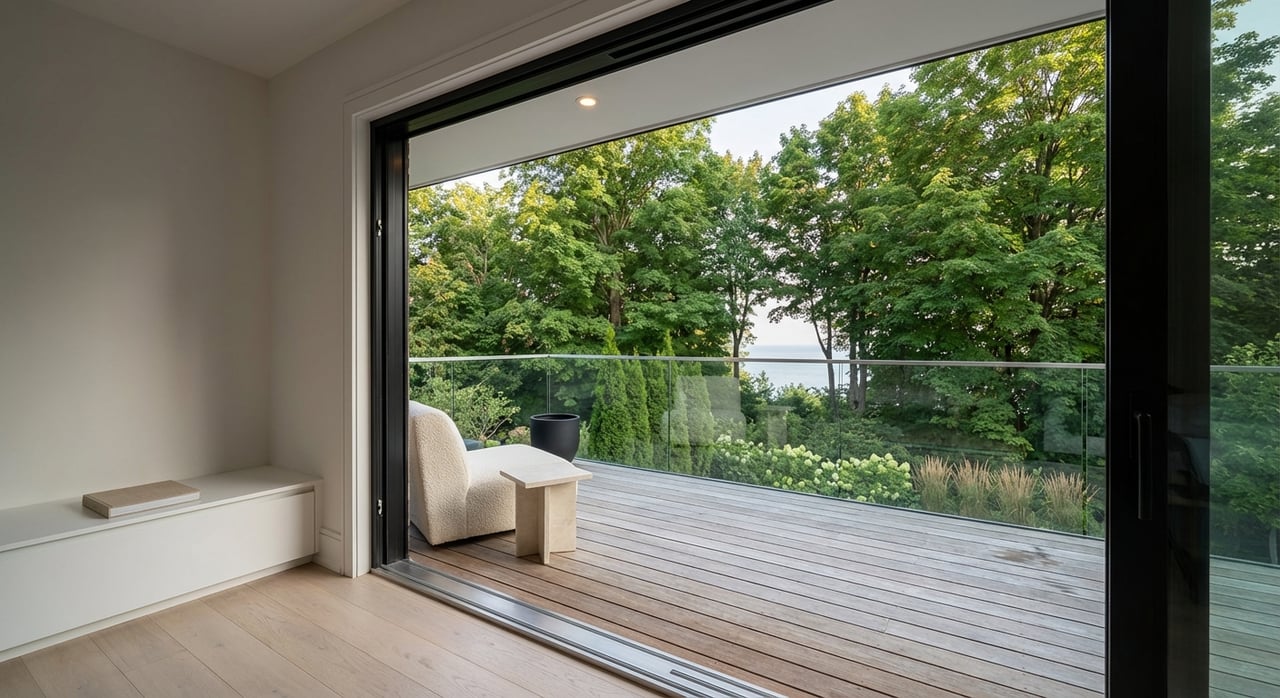
Does your home’s best feature live just beyond the glass? In Scarborough Village, a sweeping lake horizon or a tranquil ravine can be the difference between a good sale and a great one. If you want to maximize price while protecting your privacy and minimizing disruption, you need a plan tailored to view properties. In this guide, you’ll learn how to package your view, reduce buyer risk, and position your home for premium results. Let’s dive in.
Know your Scarborough Bluffs view
Not all views read the same to buyers. The Scarborough Bluffs stretch for roughly 15 km and include varied lookouts, beaches and parks, which means homes present different view classes and sightlines. Some properties offer panoramic lake vistas. Others face treed ravines or partial lake glimpses between canopies.
Start by naming your specific view type and documenting it clearly. Capture what a buyer will see from the main living area, the primary bedroom and the terrace. Use a simple map or site plan to show orientation to the shoreline or ravine. The City’s overview of the Scarborough Bluffs parks and features can help you describe local landmarks buyers recognize.
How a view translates to value
Academic research shows that views carry measurable premiums, but the lift depends on the view category, quality, and scarcity. Hedonic pricing studies report large premiums for unobstructed coastal views, with smaller yet meaningful uplifts for lake and partial views. A classic reference is summarized in the economics literature on view premiums here.
Use that research as context rather than a formula. Toronto is its own market. The practical path is to benchmark against recent local sales with the same view class, then adjust for orientation, privacy and condition. If your property sits near the bluff edge or has perceived risk, buyers often discount unless you provide credible documentation.
Here is a simple approach that works:
- Identify your exact view type and quality. Note whether it is unobstructed or partial, and from which rooms it is visible.
- Run a focused CMA that isolates comps with similar view class and lot exposure.
- Where uncertainty exists, consider a short appraisal or a targeted broker price opinion that treats the view as a discrete line item.
Risk, regulation and the Bluffs
The Toronto and Region Conservation Authority and the City manage shoreline and erosion risk along the Scarborough waterfront. Their ongoing work affects public access, permits and long‑term slope considerations. Review recent shoreline planning context through the TRCA’s 2024 annual report, then confirm how, if at all, broader initiatives intersect with your lot.
If your home is near the bluff edge, a geotechnical or engineering letter that comments on slope conditions can calm buyer concerns and support negotiations. It also demonstrates diligence should questions arise during due diligence.
Trees and ravines carry their own rules. Before trimming or removing any vegetation, check the City’s tree and ravine protections. Unauthorized work can trigger enforcement or fines. Start with the City’s guidance on tree and ravine contraventions, and loop in an arborist if needed.
Pre‑list preparation that elevates your view
Small adjustments can make your view read larger and cleaner, both in person and online.
- Optimize sightlines. Reposition or remove bulky furniture that blocks windows. Clean windows inside and out. Consider neutral, minimal window treatments during showings.
- Tidy decks and terraces. Power wash, refresh planters and add low-profile seating that points to the view.
- Address safety and maintenance. Secure railings and stairs. If you are near the bluff edge, consider a quick condition check to remove doubt.
- Verify vegetation rules. Trim hedges that obstruct sightlines only after confirming permit requirements for trees and protected zones.
Photography and visual storytelling that sells
View homes are won and lost online. Invest in professional photography that stages a journey from interior to terrace to aerials. The National Association of Realtors reports that strong staging and visual assets often translate to faster sales and, according to surveyed agents, modest increases in offers. Review the summary of these findings in NAR’s home staging report.
A recommended photo and media package for view listings:
- High-resolution interiors that frame the view from living, kitchen and primary suite.
- Terrace and balcony shots at mid-day and twilight for emotional impact.
- Aerial or drone images that show how the home sits relative to the Bluffs, shoreline or ravine.
- Floor plans and a simple site orientation graphic that points to the lake, park or trail.
If you use drones, follow the rules. Transport Canada sets airspace standards and pilot requirements, and some urban flights require an advanced certificate or permissions. Hire a certified operator who will verify airspace and apply for any needed clearances. Review where you can fly in Transport Canada’s drone guidance. Launching from City parks or filming on TRCA lands may also require permits, so confirm requirements in tandem with the operator and your listing team, and refer to the TRCA’s recent work and jurisdiction overview.
Staging and privacy for upscale sellers
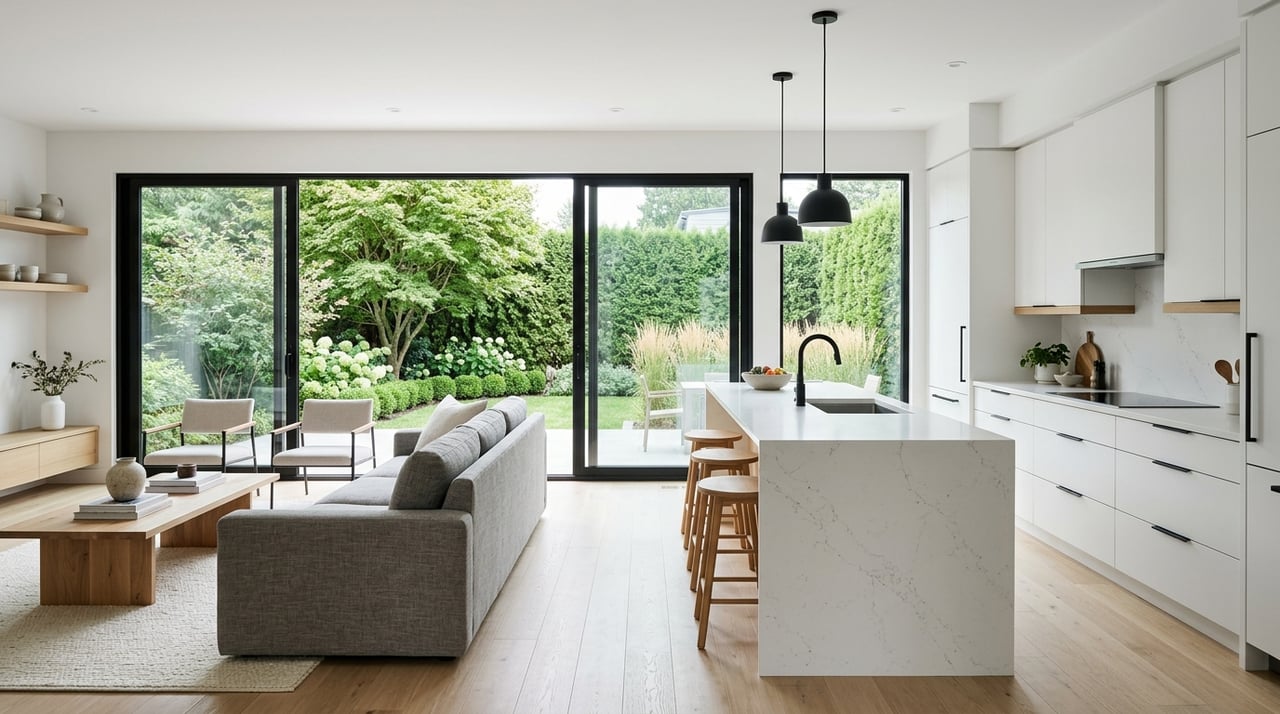
For view homes, the living room, primary bedroom and kitchen do the heavy lifting. Keep decor neutral and uncluttered so eyes go straight to the horizon. Use cohesive textures and minimal window treatments so the view reads cleanly in photos and walkthroughs. NAR research highlights these rooms as the most influential in staging outcomes.
If privacy matters, you have options. Replace public open houses with broker-only events and invitation-based showings. Offer a narrated video or virtual walkthrough to screen casual interest. You get fewer footsteps and a better experience for serious buyers.
Pricing and positioning strategy
Resist the shortcut of “view equals a fixed percent.” Instead, triangulate:
- Run a local CMA that isolates recent sales with the same view type and lot exposure.
- Support pricing with a concise appraisal or broker opinion where it adds confidence.
- If there is any perceived hazard or uncertainty, include a brief engineer’s letter to neutralize objections.
Position the lifestyle clearly and simply. Reference nearby amenities buyers recognize, like the beaches at Bluffer’s Park, waterfront trails and garden experiences at Guild Park. Ground your copy in what daily life looks like, not speculation.
Show management and disclosure package
Premium results come from a clean process and good paperwork. Build a disclosure pack before launch so buyers get answers fast. In Ontario, agents and sellers must identify and disclose material facts. Review the Real Estate Council of Ontario’s guidance on material facts and disclosure obligations and the bulletin on facts a seller is legally obligated to disclose.
Insurance questions are common in waterfront-adjacent sales. Collect your policy details, including any overland flood or sewer backup endorsements, and a record of past claims if relevant. Severe weather events have increased in the GTA, which affects buyer diligence and coverage conversations. The Insurance Bureau of Canada has highlighted recent flash-flood events and preparedness needs in the Toronto region, summarized here.
For showings, use a tight schedule, verify IDs and document access. A listing concierge can control entry, lights and alarm codes, and provide a seamless arrival to the main view moment.
A simple 2–6 week pre‑market timeline
Use this as a quick roadmap. Scale up or down based on your home’s condition and goals.
Week 0–1: Regulatory and site checks
- Confirm any TRCA or City planning that affects your lot. Order a quick title check if needed.
- If near the bluff edge, book a concise engineering or site letter.
- Consult an arborist before any trimming in protected zones.
Week 1–3: Prep and staging
- Open sightlines, clean windows and stage key rooms with luxury minimalism.
- Refresh terraces and exterior touch-ups for curb appeal.
- Book photography, twilight session and a certified drone operator if using aerials.
Week 2–4: Marketing build
- Produce floor plans, site orientation and a short, narrated video or 3D tour.
- Assemble the disclosure pack: permits, inspections, engineer or arborist letters, insurance details.
- Plan broker-only opens and a private virtual tour to screen buyers.
Week 4–6: Launch and manage
- Release visuals in a staged sequence to build momentum.
- Track inquiries, control showings and respond to buyer questions with ready documents.
When quiet exposure is the right move
Not every view property needs a public spotlight. If you prefer discretion, limited-release marketing with private showings can capture serious demand while protecting your time and privacy. A curated off-market network and strong broker relationships help surface aligned buyers who value your view for the right reasons.
Ready to talk strategy for your Scarborough Village view home? Book a private consult with Nicole Digalakis to design a plan that highlights your vista and delivers a confident result.
FAQs
How do I price a Scarborough Bluffs lake view vs. a ravine view?
- Use recent local comps that match the same view type and quality, then support pricing with an appraisal or broker opinion that treats the view as a separate adjustment.
What permits or rules apply if I want to trim trees before selling?
- Confirm the City’s tree and ravine protections and consult an arborist before trimming, since protected areas carry strict enforcement and potential fines.
Are drones allowed for listing photos near the Scarborough Bluffs?
- Yes with conditions. A certified operator must follow Transport Canada rules, confirm airspace and obtain any required City or TRCA permits for launch or filming.
What disclosures do Ontario sellers need for bluff‑edge homes?
- Disclose known material facts such as slope or erosion issues and relevant past claims, following RECO’s guidance and using the proper brokerage forms.
How can I minimize showings yet still attract strong offers?
- Use narrated video or virtual tours to pre-qualify interest, host broker-only and invitation-based showings, and provide a complete disclosure pack to speed decisions.