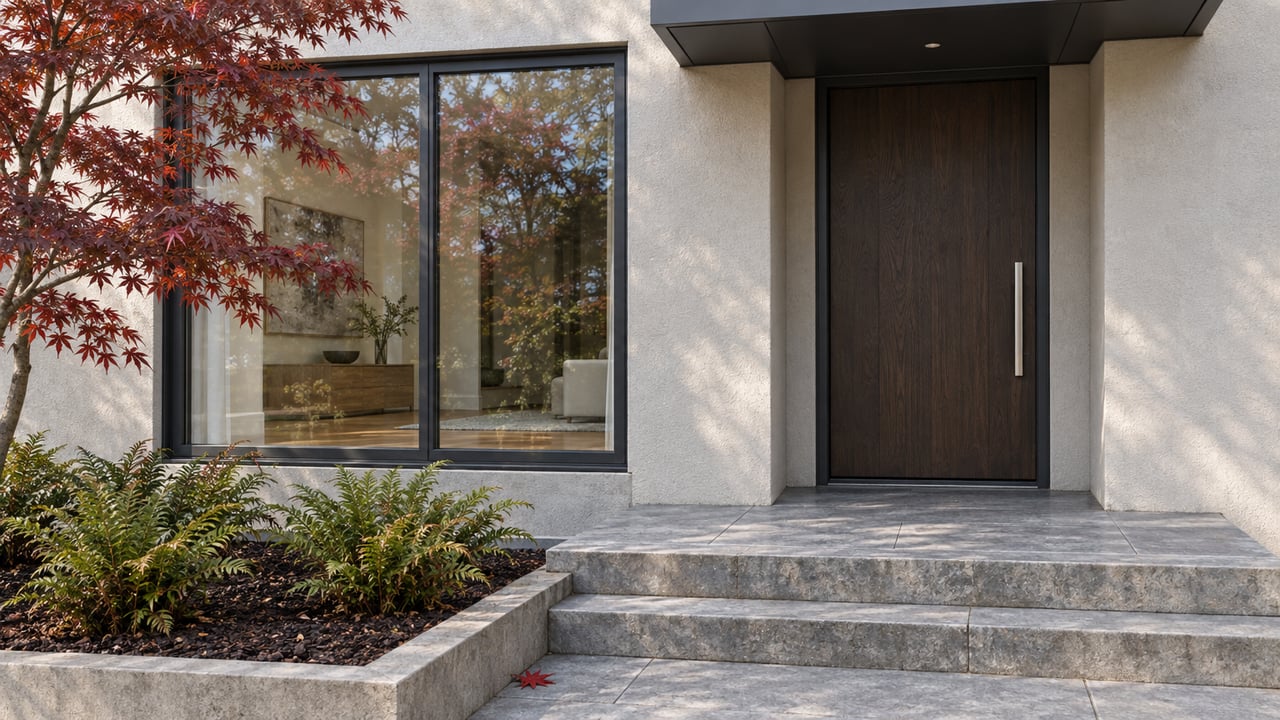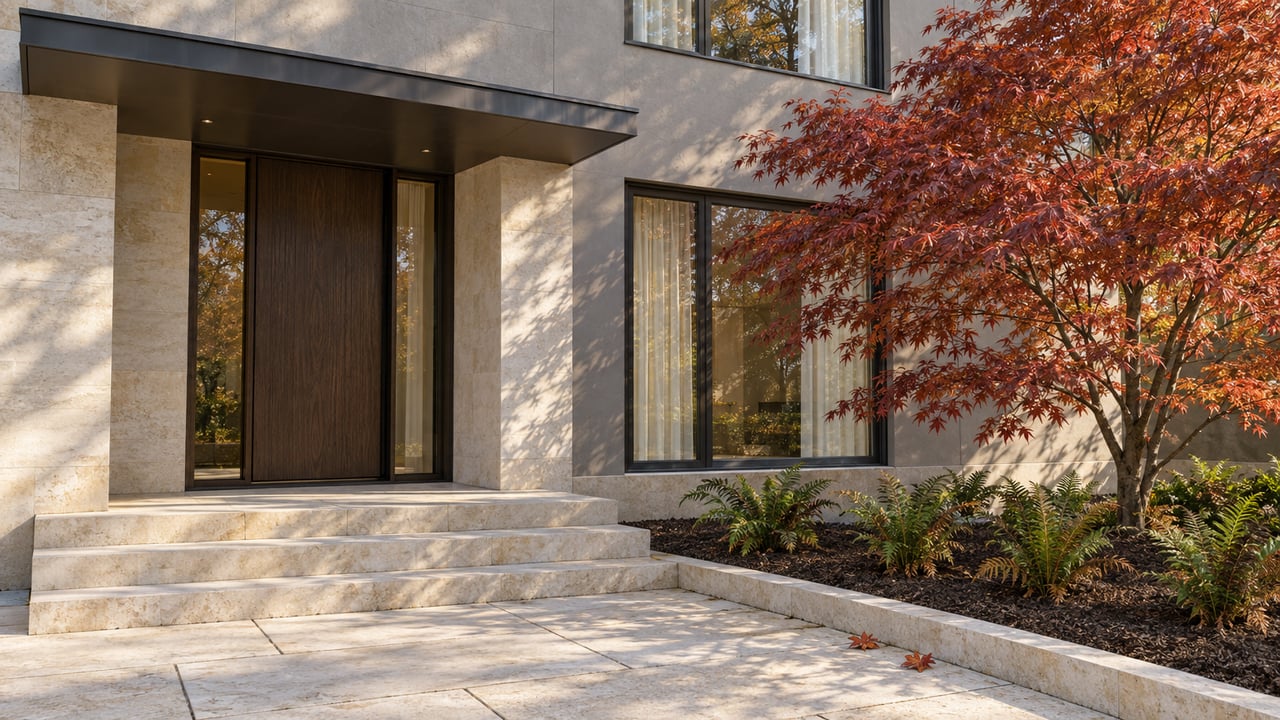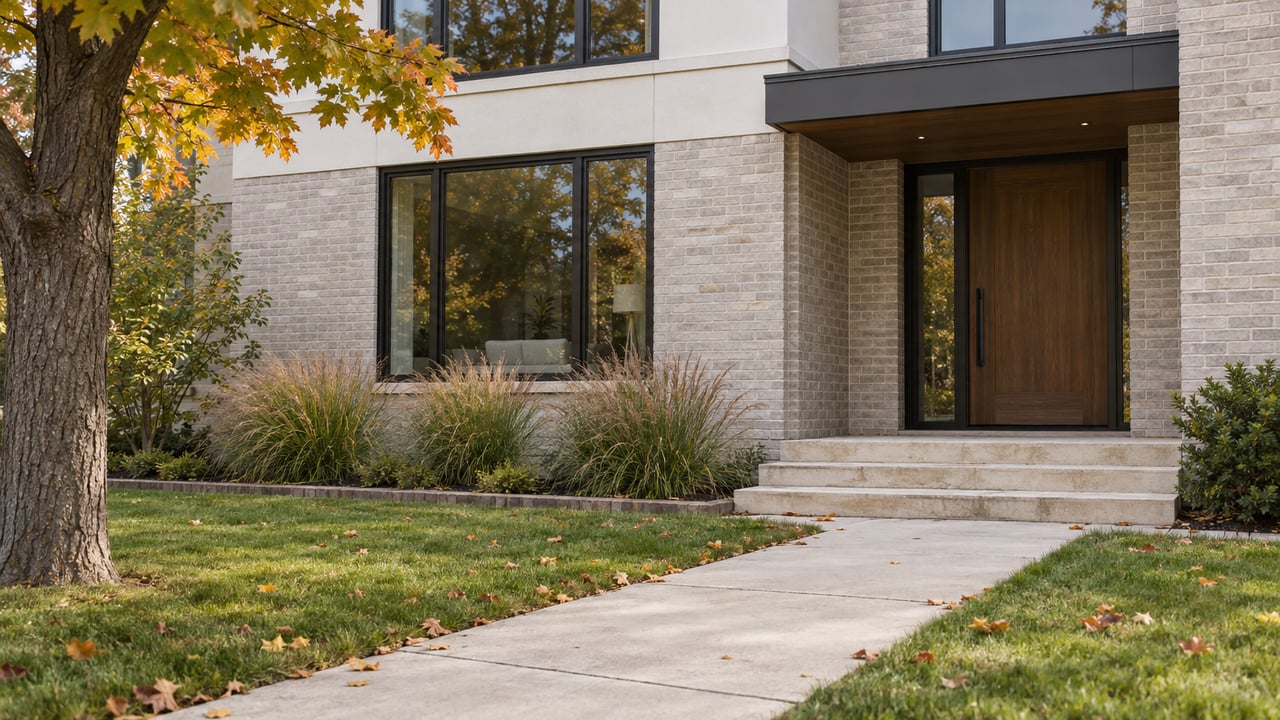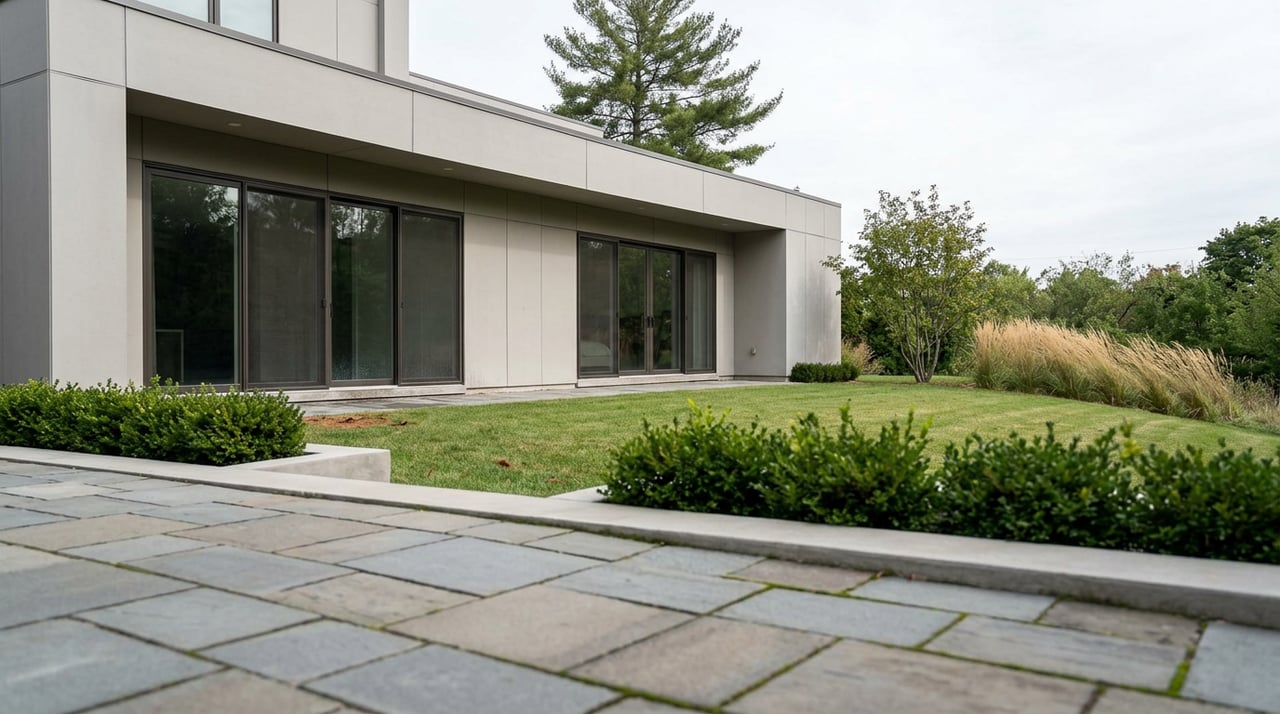
Two nearly identical brick bungalows sit three doors apart on a quiet Cliffside street, both a similar walk from Bluffer's Park, both backing onto the same ridge of pale glacial clay that gives the Scarborough Bluffs their name. A buyer touring both would be forgiven for assuming they carry the same set of rules. They don't. One sits inside the Toronto and Region Conservation Authority's regulated top-of-bank zone. The other doesn't. From the sidewalk, you cannot tell which is which.
That's the part of Bluffs real estate that surprises people who've only read the general warnings about erosion. The dividing line that actually determines your permit timeline, your renovation budget, and in some cases your closing conditions isn't how close a house looks to the edge. It's a calculated setback distance called the stable top of bank, and the only way to know which side of it your specific lot falls on is a survey, not a walk around the yard.
Why "It Looks Far From the Edge" Isn't the Answer
For the large majority of homes in Cliffcrest, Cliffside, and Birch Cliff, none of this ever comes up. Most lots in these neighbourhoods sit well back from the crest, and TRCA jurisdiction simply doesn't apply to them. That's the reassuring half of the story, and it's true for most transactions in the area.
The other half is the part that catches people off guard. Toronto's Zoning By-law 569-2013 sets general setback and coverage rules for the city, but properties near the Bluffs and adjacent ravines carry an additional layer of TRCA review tied to slope stability. That review isn't triggered by a fixed number of metres from the visible edge. It's triggered by where a geotechnical calculation places the stable top of bank, a figure that accounts for soil composition, slope angle, and erosion history specific to that lot. Two lots can look the same distance from the crest and land on opposite sides of that calculation because the ground underneath them behaves differently.
The only way to establish where that line actually falls on a given property is an updated topographic survey, typically running in the range of $2,800 to $3,000. Skipping that step doesn't make the question go away. It just delays the moment you find out the answer, usually to a less convenient point in the process.
What Actually Changes Once You're Inside the Line
If a lot does fall within TRCA's regulated area, the practical effects show up in three places: cost, time, and what you're allowed to build.
Before a homeowner near the crest even commissions architectural drawings, a preliminary technical review with TRCA's evaluation team is worth the money. That review, covering up to three technical team meetings and two site visits, typically costs between $4,220 and $5,705. It sounds like an odd thing to pay for before you've designed anything, but its purpose is narrow and useful: it tells you whether your addition or rebuild is feasible at all before you've spent real money on a design that TRCA later asks you to change.
Combined with the topographic survey, a homeowner near the top of bank is often looking at $7,000 to $8,700 in due diligence costs before the architectural phase begins. That's not a fee anyone enjoys paying. But the alternative, according to the pattern local building guides describe, is worse. One frequently cited example involves a Cliffside project where skipping this early-stage review led to a $250,000 budget jump after the homeowner had already invested in full architectural drawings, only to discover mid-process that the design didn't account for the actual stable top-of-bank location.
Timeline follows the same split. A standard Toronto renovation or addition permit typically moves through in around four months. Add TRCA jurisdiction to the mix and that window stretches to somewhere between four and twelve months for most projects, with TRCA review alone adding a minimum of two to three months to the front end. For the most complex cases, ones that require ecological, hydro-geological, or fluvial geomorphology studies alongside the geotechnical work, the same permitting guidance that describes the four-to-twelve-month range also warns that the most technically demanding projects can stretch toward eighteen months.
Here's a quick side-by-side of what that split looks like in practice:
| Standard permit path | TRCA-jurisdiction path (near top of bank) | |
|---|---|---|
| Typical timeline | Around 4 months | 4 to 12 months, up to 18 for complex technical studies |
| Pre-design review | Not required | Technical team review, roughly $4,220–$5,705 |
| Survey requirement | Standard property survey | Topographic survey to locate stable top of bank, roughly $2,800–$3,000 |
| Additional studies possible | None | Geotechnical, hydro-geological, or slope stability assessments for major projects |
None of this is a reason to avoid buying or renovating near the Bluffs. It's a reason to find out early which column your property sits in, while you still have time to plan around it instead of reacting to it.
The Free Inspection Almost Nobody Signs Up For
There's one piece of this that works in a homeowner's favour and gets overlooked constantly. TRCA runs a Bluff Recession Monitoring Program that provides annual inspections along the bluff crest at no cost to participating homeowners, tracking erosion rates and changes in site conditions over time. For an owner whose property sits near the top of bank, that's a running record of how their specific stretch of shoreline is actually behaving, not a general estimate for the whole 15-kilometre stretch of Bluffs. It's useful information to have on hand whether you're planning a renovation, weighing a sale, or just trying to understand what you own. It costs nothing, and most owners near the crest have never asked to join it.
What This Means If You're Buying or Selling Here
For sellers with a property anywhere near the crest, the practical move is to have the survey and any existing geotechnical documentation ready before the listing goes live, not after an accepted offer triggers a buyer's due diligence period. A buyer who discovers mid-transaction that a property sits inside TRCA jurisdiction, with no paperwork to show what that means for future work, has every reason to slow down or renegotiate. A seller who can hand over that information upfront removes the uncertainty before it becomes a bargaining chip.
For buyers, the checklist is short: ask whether the specific lot has ever had a topographic survey establishing the stable top of bank, ask for any existing TRCA correspondence or permit history, and confirm with your insurer whether proximity to the crest affects coverage or premiums before you're locked into a firm deal. None of these questions assume a problem exists. They just replace a guess with an answer.
A Few Questions Worth Asking Directly
Does every home in the Scarborough Bluffs area need a geotechnical report to sell? No. The requirement only applies to lots where TRCA's stable top-of-bank calculation places the property within its regulated area, which is a minority of homes in Cliffcrest, Cliffside, and Birch Cliff.
How do I find out if my lot is affected before I list or buy? A topographic survey is the definitive way to locate the stable top of bank on a specific property. Toronto Building's Scarborough District and TRCA can also confirm whether a given address falls within the regulated zone.
Is there a cost-free way to track erosion on my own property over time? Yes. TRCA's Bluff Recession Monitoring Program offers annual crest inspections at no charge to participating homeowners, and it's worth joining if your lot is anywhere near the line.
If you're weighing a purchase or a sale near the Bluffs and want to know which side of that line your property sits on before it becomes a surprise, Nicole Digalakis can help you get the right answers early. Book a complimentary consultation and let's map out what your specific lot actually requires.
This article is general information, not legal, tax or financial advice. Consult a qualified professional about your situation.