Thinking about offsetting your mortgage with rental income in East York or Riverdale? It can be a smart owner strategy, but in these established east-end neighborhoods, success usually comes down to more than finding extra space. If you want to turn part of your property into an income-producing unit, you need to understand zoning, permits, safety rules, and how the property itself fits the lot. This guide will walk you through the key house hacking options, what to check before you renovate, and where owners often get tripped up. Let’s dive in.
Why East York and Riverdale Stand Out
East York and Riverdale have housing stock that often suits owner-occupied rental strategies better than areas dominated by large condo towers or newer apartment buildings. Toronto’s neighborhood profiles for Old East York, North Riverdale, and South Riverdale show a mix of detached homes, semis, row houses, duplexes, and low-rise apartments, with many homes built before 1960. According to the City of Toronto neighborhood profiles, that older low-rise fabric creates more opportunities for interior conversions and rear-yard additions.
That said, these are not blank-slate redevelopment areas. They are established communities where lot-by-lot feasibility matters, and where changes often need to respect existing house forms, access, and context. In Riverdale especially, design sensitivity can play a bigger role because of heritage considerations.
What House Hacking Can Look Like
For most owner-occupiers in East York and Riverdale, house hacking usually means creating or using a legal self-contained unit while continuing to live on the property. In practice, that often falls into one of three categories.
Secondary suite or basement apartment
A secondary suite is often the most familiar entry point. Toronto states that one secondary suite is generally permitted within a detached house, semi-detached house, or townhouse, subject to zoning performance standards, as outlined in the City’s secondary suites overview.
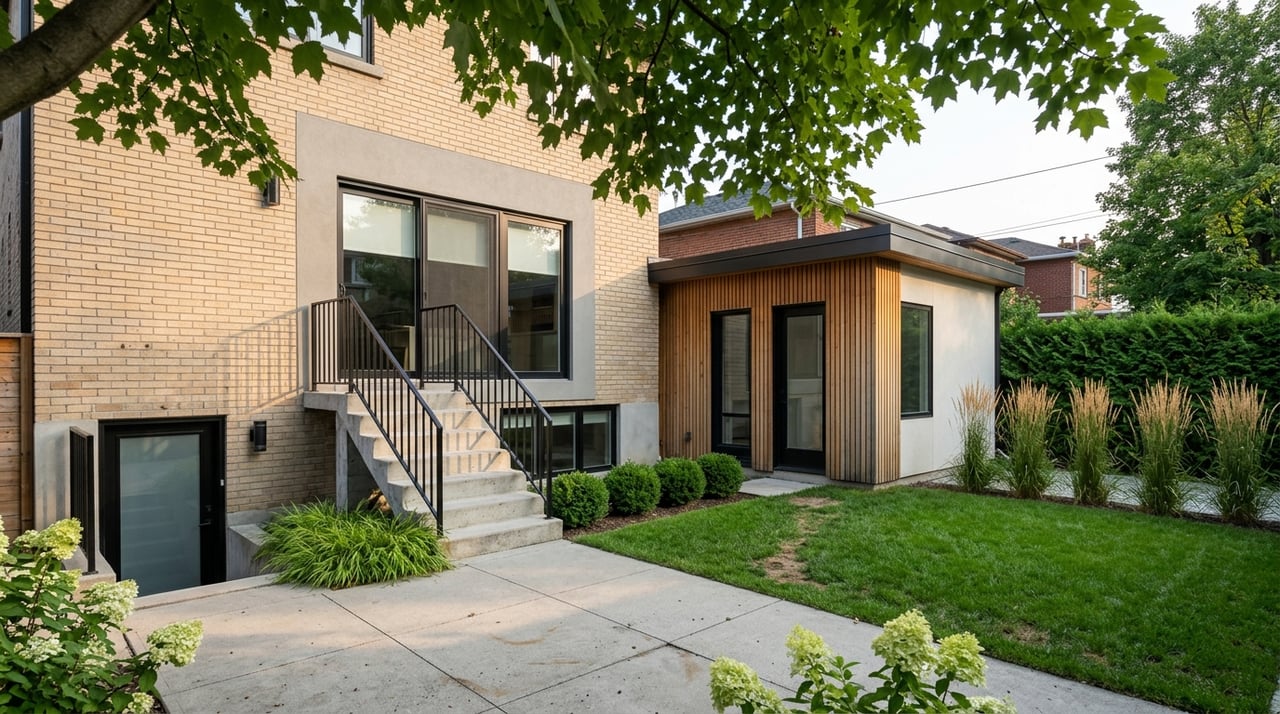
For many owners, a basement apartment is the obvious place to start because the space already exists. But this is where people can underestimate the work involved. The City’s two-dwelling-unit house safety guidance highlights common issues such as unpermitted renovations, poor escape routes, missing interconnected smoke and carbon monoxide alarms, and electrical work that was never properly inspected.
The main takeaway is simple: if you are converting a basement, treat it as a code-and-permit project, not a cosmetic upgrade.
Laneway suite
A laneway suite is a separate self-contained unit in the rear yard on the same lot, typically next to a public laneway. For some east-end properties, this can create rental income without giving up part of your main house. Toronto’s laneway suite guide notes that no parking spaces are required for the laneway suite itself, or for the dwelling units and secondary suites on the same lot if that ancillary building contains a laneway suite.
That parking relief can be meaningful in older neighborhoods where on-site parking is limited. Still, laneway suites are highly site-specific. Access, servicing, fire access, and lot configuration all need to work.
Garden suite
A garden suite is another rear-yard self-contained unit, but it is usually detached and not on a public lane. Toronto says garden suites are permitted in most residential zones, though properties that abut a public laneway may need to follow laneway-suite rules instead.
For owners with enough rear-yard space, a garden suite can be a flexible option. It may support rental income, a future downsizing plan, or multigenerational living. But again, this is not a one-size-fits-all solution because tree protection, access, and zoning standards can all affect feasibility.
Why Lot-Specific Checks Matter
One of the biggest mistakes owners make is assuming a nearby renovation proves their own property can do the same. In East York, that can be especially risky. The City’s East York and Leaside zoning information points homeowners to legacy by-laws, including older East York rules, which means properties should not be treated as identical just because they sit on the same street or share a similar look.
If you are exploring a suite conversion or rear-yard unit, verify the exact zoning on your lot first. That early step can save you time, money, and frustration before you commit to design work or contractor pricing.
Riverdale Heritage Considerations
Riverdale has another layer owners need to plan for. The neighborhood is a designated Heritage Conservation District, and the City explains that these districts are intended to guide change and support contextually appropriate growth, not freeze neighborhoods in place. You can review that broader framework in Toronto’s Heritage Conservation Districts guidance.
For house hacking, that means exterior changes, additions, and rear-yard construction may need a more design-sensitive approach than they would on a non-heritage lot. It does not mean the project is impossible. It does mean your timeline, design decisions, and approval path may need more care.
Permits and Approvals to Expect
Once you know the property may be suitable, the next step is understanding approvals. For garden suites, Toronto recommends obtaining a Zoning Applicable Law Certificate to confirm zoning and applicable-law compliance. The City also notes that a minor variance may be required if your proposal does not meet zoning standards.
Even if you use one of Toronto’s pre-approved garden and laneway suite plans, you still need a building permit and a site-specific review. The benefit is that these free plans can reduce design time and cost, while newer online permit tools may help standardize the application process.
In other words, approvals may be smoother than they once were, but they are still not automatic.
Trees, Access, and Fire Safety
Rear-yard projects often rise or fall on practical details that are easy to miss at first glance. Toronto says garden suites should not require removal of a healthy protected tree, and tree declarations may be required where private or City-owned trees could be affected. The City also notes that laneway suites must have principal access and fire access that meet Ontario Building Code standards.
This matters because a property can look perfect on paper and still face constraints on the ground. A tree, a narrow access route, or fire-separation issues can all reshape the scope and cost of the project.
Financing: Do Not Overestimate Rent
A house-hacking plan usually starts with one question: will the rental income help you qualify or improve monthly cash flow? The answer may be yes, but the details matter. According to CMHC’s mortgage insurance guidance, rental income can be included in debt-service calculations, but treatment varies by product and property type.
For a two-unit owner-occupied property, CMHC says up to 100 percent of gross rental income from the secondary suite may be considered. In other mortgage-insurance scenarios, up to 50 percent of gross rental income may count. That difference is significant, which is why you should confirm lender assumptions before relying on projected rent to make the numbers work.
Tenancy Rules You Need to Know
If you plan to rent out part of your property, treat that side of the arrangement like a real tenancy from day one. Ontario states that most private residential tenancies are governed by the Residential Tenancies Act, 2006, and the Ontario standard lease is required for most private residential tenancies signed on or after April 30, 2018.
Ontario also explains in its renting in Ontario guide that the 2026 rent increase guideline is 2.1 percent for most tenants living in rented houses, semis, basement apartments, and condos. The province also notes that most new basement apartments first occupied for residential purposes after November 15, 2018 are exempt from rent control.
For owners, this affects how you model long-term cash flow. Rental income can be helpful, but it should be planned around real legal rules, not informal assumptions.
Best Owner Tips Before You Buy or Renovate
If you are considering house hacking in East York or Riverdale, keep these practical steps in mind:
- Confirm zoning first so you know what your specific lot can legally support.
- Treat basement work as a safety project with permits, code review, and proper inspections.
- Check heritage context in Riverdale before planning exterior changes or rear-yard construction.
- Review access and tree constraints early because they can affect feasibility and cost.
- Ask a mortgage professional how rental income will be counted for your exact financing scenario.
- Use proper tenancy documents and understand Ontario rent rules before setting your budget.
- Do not assume a neighboring property sets the standard for your own home.
The Smart Way to Approach It
The best house-hacking opportunities in East York and Riverdale are usually the ones where the property already has, or can legally accommodate, a second suite or rear-yard unit. The strongest candidates are not just affordable on paper. They also make sense from a zoning, code, access, and approval standpoint.
That is where local guidance matters. If you are buying with this strategy in mind, or weighing whether your current home could support it, a thoughtful property review can help you avoid costly assumptions and focus on realistic options. If you want tailored guidance on east-end homes that may fit this kind of plan, connect with Nicole Digalakis for a complimentary consultation.
FAQs
What does house hacking mean for homeowners in East York and Riverdale?
- For most homeowners in East York and Riverdale, house hacking means living in the property while renting out a legal secondary suite, basement apartment, laneway suite, or garden suite to help offset housing costs.
Are basement apartments allowed in East York and Riverdale homes?
- Toronto generally permits one secondary suite in a detached house, semi-detached house, or townhouse, subject to zoning performance standards and building-code compliance.
Do Riverdale heritage rules stop owners from adding rental units?
- No, but Riverdale’s Heritage Conservation District can make exterior alterations, additions, and rear-yard projects more design-sensitive and potentially slower to approve.
Do East York properties need special zoning checks before renovation?
- Yes, East York properties may be affected by legacy zoning by-laws, so you should confirm the exact zoning and lot-specific rules before assuming a conversion is allowed.
Can rental income help you qualify for a mortgage on a house hack?
- Yes, CMHC says rental income may be included in debt-service calculations, but the amount that counts depends on the mortgage product and property type.
Are new garden or laneway suites easier to plan in Toronto now?
- Toronto has introduced pre-approved garden and laneway suite plans and expanded online permit tools, but you still need a building permit and site-specific review.