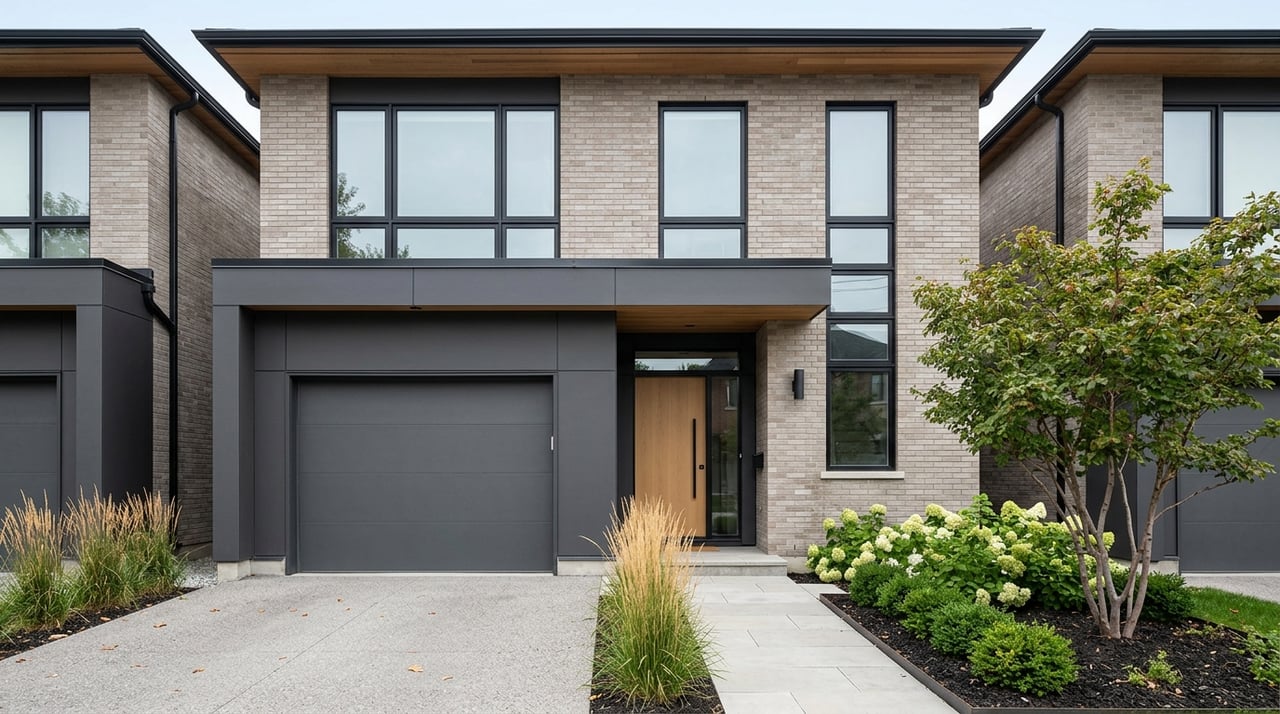
If you are weighing a townhome against a detached home in Markham, you are probably balancing two big goals at once: finding the right lifestyle fit and staying confident about your budget. That choice can feel simple on the surface, but in Markham, the price gap, maintenance differences, parking setup, and neighbourhood context can change the answer quickly. The good news is that once you know what to compare, the decision gets much clearer. Let’s dive in.
Start With the Markham Price Gap
In many Markham neighbourhoods, townhomes offer a lower entry point than detached homes. According to TRREB’s February 2026 Markham market watch, the average detached sale price was $1,507,887, while the average attached row or townhouse sale price was $1,153,529.
That is a difference of $354,358, or about 31%. For many buyers, that gap can shape everything from your down payment strategy to how much room you have left for upgrades, furnishing, or closing costs.
It is also important to treat these numbers as a snapshot, not a fixed rule. TRREB notes that average and median prices can shift based on the mix of homes sold, so your real comparison should focus on the specific home type and neighbourhood you want.
Markham Is Not One Market
One of the biggest mistakes buyers make is thinking of Markham as a single pricing bucket. In reality, the spread between townhome and detached living can look very different depending on where you search.
TRREB’s Q4 2025 community report for Unionville shows that detached homes averaged about $1.9 million, while attached row or townhouse homes averaged about $1.071 million. Condo townhomes averaged about $627,000, which shows just how much housing form can change the budget conversation even within one pocket of Markham.
This matters because your decision is not only about home style. It is really about what combination of price, outdoor space, upkeep, and location you are buying in a specific part of the city.
When a Townhome Makes Sense
A townhome can be a smart fit if you want to enter the Markham market with more budget flexibility. In many cases, choosing a townhome instead of a detached home can leave more room for the location you want or the finishes you care about most.
That can be especially helpful if you are moving from Toronto and trying to balance space with monthly affordability. Rather than stretching to buy detached right away, you may find that a townhome lets you stay in a preferred area while keeping more financial breathing room.
Townhomes can also appeal to buyers who want less exterior responsibility, but that depends on the ownership structure. This is where it pays to look beyond the label.
Condo Townhomes and Shared Upkeep
With a condo townhome, some exterior elements may be handled by the condominium corporation, depending on the declaration and governing documents. CMHC notes that this can include items like exterior walls, windows, lawns, gardens, and driveways.
The Condominium Authority of Ontario also says repair responsibilities depend on the Condominium Act and the corporation’s governing documents. In plain terms, you should never assume the monthly fee covers everything without reviewing the documents carefully.
If you like the idea of more predictable exterior maintenance, a condo townhome may be worth a close look. Just make sure you review the declaration, standard unit definition, and reserve fund information before you buy.
Freehold Townhomes and Full Responsibility
A freehold townhome is different. CMHC says that for freehold ownership, the owner is normally responsible for the entire home, including the roof, exterior walls, lawn, garden, driveway, and garage.
That means a freehold townhome can feel much more like a detached home from a maintenance standpoint. You may save on purchase price compared with detached, but you should still budget for repairs and exterior upkeep.
When Detached Living Makes Sense
Detached homes usually make the most sense when private space is high on your list. If you want more separation from neighbours, a larger yard, or extra storage, detached living often offers the clearest path.
Markham’s zoning by-law helps explain why. The minimum lot frontage is 9.0 meters for a single detached dwelling and 6.0 meters per unit for townhouse buildings, which means detached frontage is 1.5 times the townhouse minimum.
That does not mean every detached home is dramatically larger than every townhome, but it does show why detached properties often deliver more private outdoor space and more physical separation. For buyers who value that tradeoff, the higher price may feel justified.
Compare Parking Beyond the Space Count
Parking is another area where the details matter more than the headline. Markham’s parking standards generally require two parking spaces per dwelling unit for single, semi-detached, and townhouse dwellings, although some areas can use alternate standards.
So if both home types often meet the same basic parking count, the real question becomes how those spaces work in daily life. You may be comparing a garage and driveway, tandem parking, lane access, or tighter visitor arrangements rather than simply asking whether there is enough parking on paper.
If you have multiple drivers, frequent guests, or need easier loading for kids or hobbies, this part of the comparison deserves a close look. A home that technically offers two spaces may still feel very different depending on the layout.
Think About Maintenance Realistically
Maintenance can change the ownership experience more than many buyers expect. Markham’s property standards require homes, fences, detached garages, and accessory buildings to be kept structurally sound, repaired, and safe.
For detached owners, that usually means carrying the full burden of exterior upkeep yourself. Roof repairs, driveway maintenance, fencing, landscaping, and seasonal work are part of the package.
For townhome buyers, the key question is who handles what. If it is condo ownership, some responsibilities may be shared. If it is freehold, many of those same detached-style responsibilities may still fall to you.
Match the Home Type to Your Priorities
The better choice usually becomes clear when you stop asking which home type is better and start asking which tradeoffs fit your life.
A townhome may be the stronger option if you want:
- A lower purchase price in many Markham neighbourhoods
- More flexibility in your monthly budget
- Access to a preferred area without stretching as far
- Potentially less exterior upkeep in a condo structure
A detached home may be the stronger option if you want:
- More private outdoor space
- More separation from neighbours
- Greater flexibility for storage and day-to-day living
- A property layout that often feels roomier overall
Neither option is automatically right. The best fit depends on what matters most to you and how that plays out in the specific Markham pocket you are considering.
Focus on Neighbourhood, Not Just Property Type
Markham’s planning framework supports complete communities and a range of mobility options, and that often shows up in how different housing forms are placed across the city. In practical terms, townhome product often appears in denser and more mobility-oriented settings, while detached homes more often trade some of that convenience for added private space.
That is why two homes with similar bedroom counts can offer very different day-to-day experiences. One may give you more yard and separation, while the other may help you stay in a location that better fits your budget and routine.
In a place like Markham, your best move is to compare homes by neighbourhood, ownership type, parking layout, and maintenance structure, not just by asking townhome versus detached in the abstract.
Make a Clearer Decision
If you are still unsure, start by ranking your top four priorities: budget, outdoor space, parking, and maintenance. Once those are in order, it becomes much easier to see whether a townhome or detached home fits your next chapter.
In Markham, the right choice is rarely about chasing a label. It is about understanding what you are getting for your money in the area you want, and making sure that choice supports both your lifestyle and your long-term plans.
When you want a tailored, neighbourhood-specific comparison, working with an experienced local team can save you time and help you avoid expensive assumptions. To talk through your options in Markham with clear, hands-on guidance, book a complimentary consultation with Nicole Digalakis.
FAQs
What is the price difference between townhomes and detached homes in Markham?
- In TRREB’s February 2026 Markham market watch, the average detached sale price was $1,507,887 and the average townhouse sale price was $1,153,529, a gap of $354,358 or about 31%.
Are townhomes in Markham always cheaper than detached homes?
- Often yes, but the gap varies by neighbourhood and housing form. In places like Unionville, detached, townhouse, and condo townhome pricing can differ significantly.
Do townhomes in Markham have less maintenance than detached homes?
- Sometimes, but it depends on the ownership structure. Condo townhomes may have some exterior maintenance handled by the condo corporation, while freehold townhomes usually leave those responsibilities with the owner.
How much parking do Markham townhomes and detached homes usually have?
- Markham’s parking standards generally require two parking spaces per dwelling unit for both townhouse and detached homes, though the configuration of those spaces can vary.
What should buyers compare when choosing a Markham townhome or detached home?
- Focus on budget, neighbourhood, outdoor space, parking layout, and maintenance responsibility, since those factors often matter more than the property label alone.